Guangze, Shaowu, Shunchang, Jian’ou, Nanping, Futun Creek, Fuling, Zhima, Nakou, Shaikou, Weimin, Yangkou, Dabugang, Eighteen Rapids
Can you imagine—a river that once sustained an entire region?
Stretching 285 kilometers, the Futun Creek flows through Guangze, Shaowu, and Shunchang before merging into the Min River at Nanping. Before roads and railways, it was the sole artery connecting the mountainous interior of northern Fujian with the outside world.
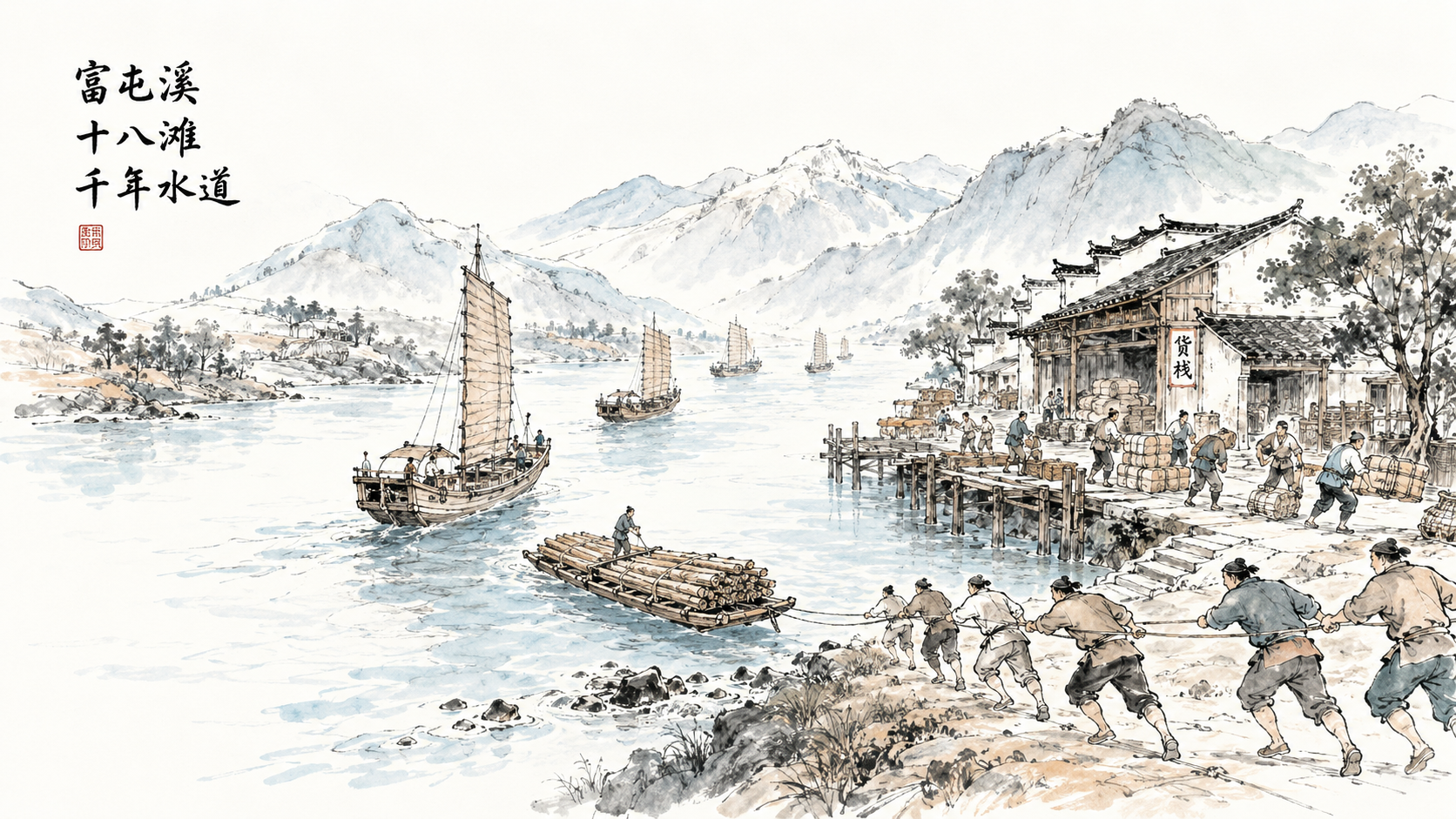
In 1780, during the Qianlong era, the Shaowu section alone had 12 docks, with over 100 boats passing daily.
100 boats meant 100 families making a living. Each dock was a miniature economic hub.
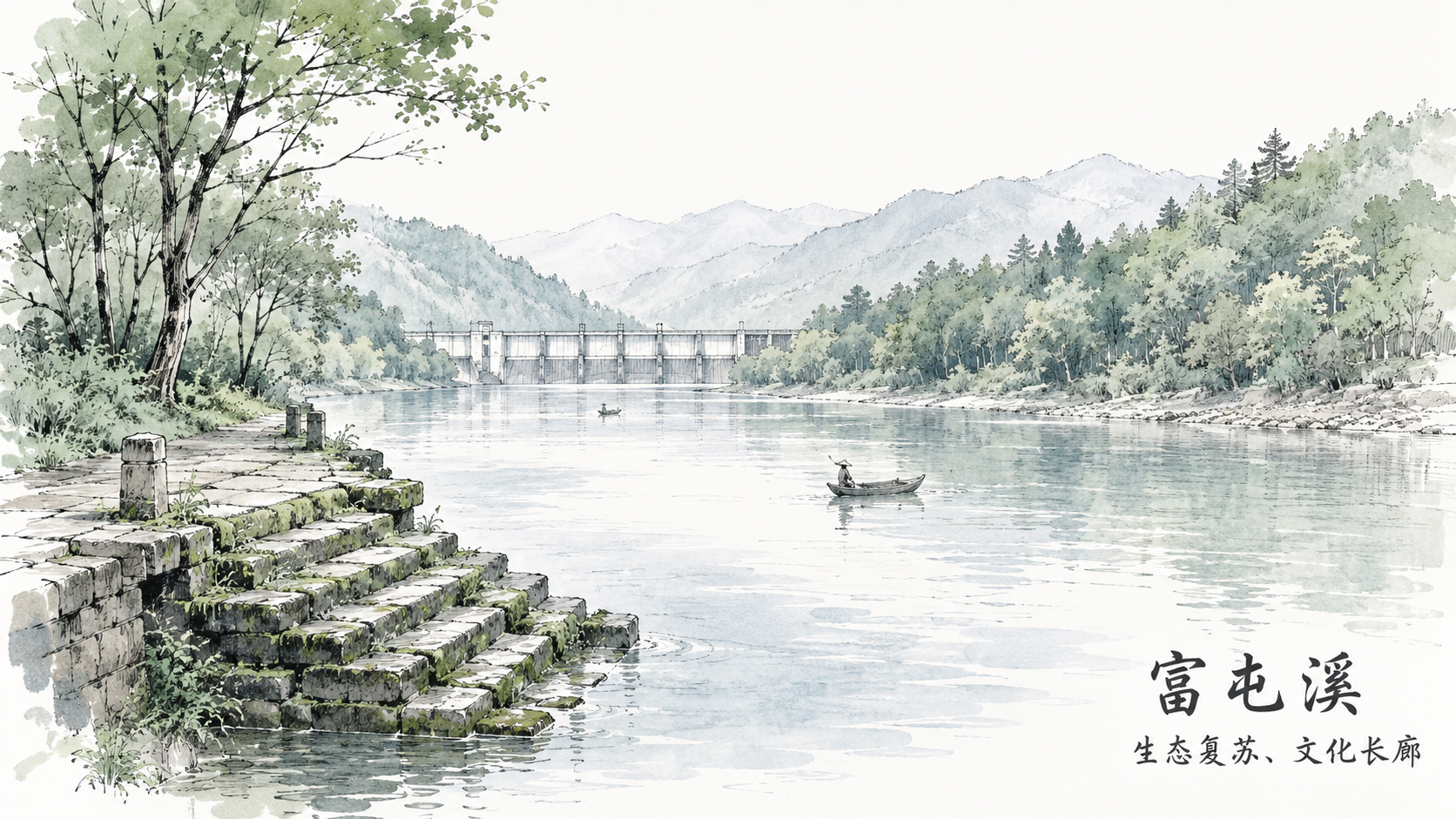
But today, if you walk along the Futun Creek, all you see is still water and abandoned stone steps.
Where are the boats? Where are the docks? Where are the trackers with their work songs?
All gone.
A Millennial Waterway
The navigation history of the Futun Creek dates back to the Northern Song Dynasty.
In 1087 AD, the creek was already a crucial grain transport route, handling tens of thousands of dan of tax grain annually.
The waterway from Shaowu to Nanping was notoriously dangerous. The channel featured the famous “Eighteen Rapids”—a series of treacherous shoals where boats frequently ran aground during dry seasons. But trackers pulled boats through with sheer muscle and willpower.
A medium-sized “Sha-fei” boat could carry 5 to 10 tons. Downstream from Shaowu to Nanping took 3 to 5 days. Upstream required 10 to 15 days.
Slow? In those days, it was the fastest option available.
In 1936, the annual freight volume in the Shaowu section was still 150,000 tons, with timber and papermaking materials accounting for over 60%. Timber was transported on massive rafts—each about 100 meters long, made of 15 to 20 sections of fir logs tied together.
Imagine: a 100-meter-long raft navigating narrow channels through the Eighteen Rapids. What a sight that must have been.
The Railway Arrives
In April 1957, the Yingxia Railway opened to full service.
The railway’s route ran almost parallel to the Futun Creek.
Rail transport cost only 40% of water transport and was more than five times faster. A three-day boat trip became a half-day train journey—at half the price.
If you were a shipper, which would you choose?
The numbers tell the story: in 1956, the Futun Creek’s freight turnover was 120,000 tons. By 1958, commercial cargo at Shaowu Port had withered to less than 30,000 tons.
Two years. Three-quarters gone.
After 1957, the creek’s navigational function was reduced to short-haul transfers between railway stations and remote forest areas.
By 1965, the number of active “Sha-fei” boats had plummeted from a peak of over 500 to fewer than 80.
500 to 80. That was the impact of the railway.
Dams Cut the Final Link
If the railway replaced navigation economically, hydroelectric dams severed it physically.
In December 1988, the Shaxikou Hydropower Station in Shunchang County was completed, with a dam over 40 meters high. Although equipped with a ship lift, its capacity was extremely limited and operating costs were prohibitive.
In 1993, the Shaowu Shaikou Hydropower Station was finished.
These two dams split the Futun Creek into several disconnected reservoir areas.
After 1993, large-scale timber rafting below the Shunchang section ceased entirely. Most of the “Eighteen Rapids,” busy for a thousand years, were submerged beneath the reservoirs.
In 1995, the main channel of the Futun Creek was downgraded from Grade V to ungraded. It was officially removed from Fujian’s provincial trunk waterway network.
A thousand-year waterway had been “delisted.”
An Unexpected Ecological Recovery
But the story doesn’t end there.
With navigation gone, the ecology recovered.
After large-scale motorized vessels withdrew, the creek’s water quality improved significantly between 2010 and 2020. Forest coverage remained above 70%.
During a 2015 cultural heritage survey, over 20 well-preserved ancient docks and tracker path inscriptions were discovered along the banks in Shunchang and Shaowu.
The marks on those stones recorded everything that once happened here.
The Futun Creek transformed from a “flowing golden corridor” into a “static cultural gallery.”
It no longer carries cargo. But it has begun to carry memories.
Rise and Fall in Numbers
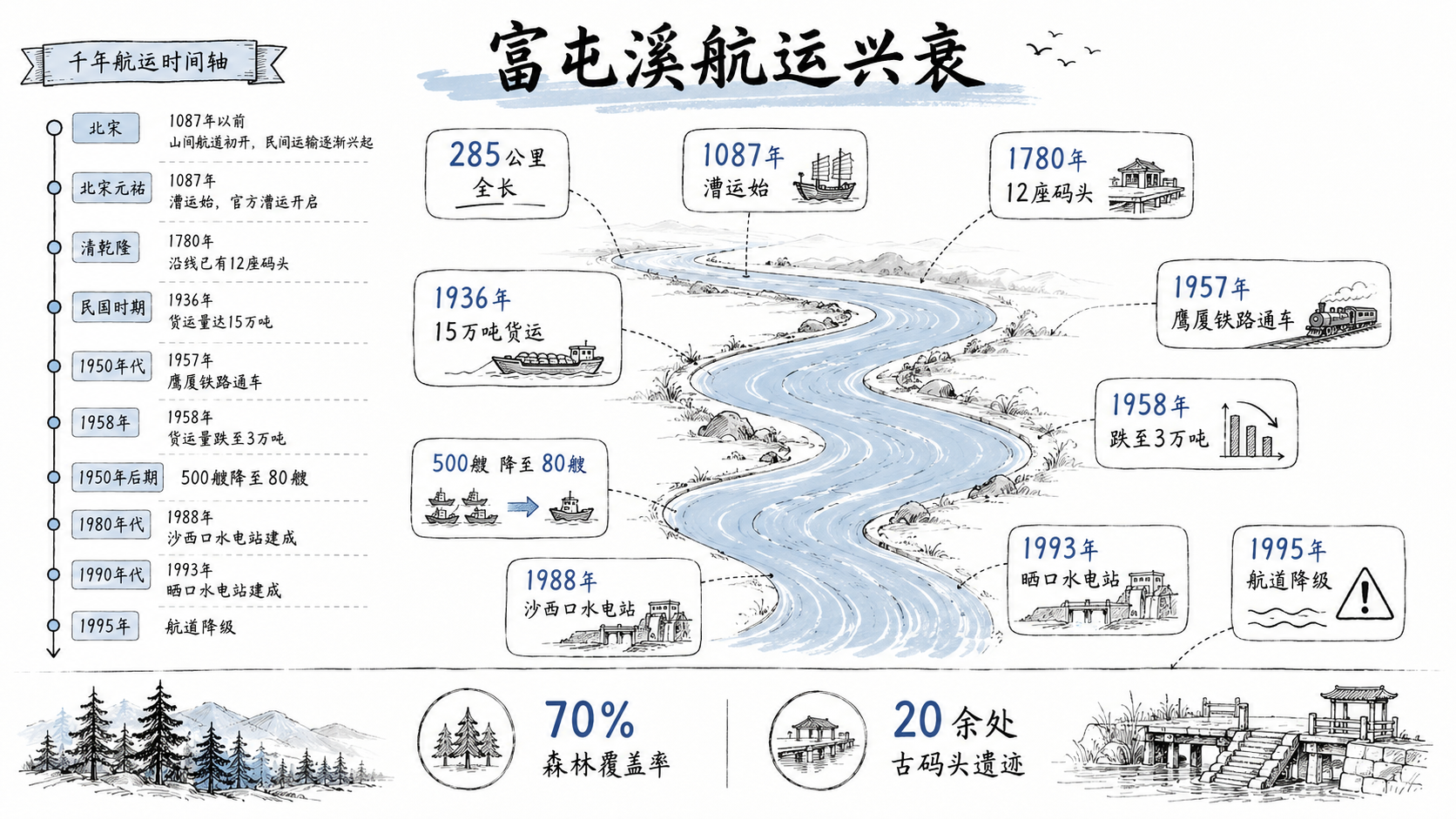
A single timeline captures a thousand years of the Futun Creek’s transformation:
- 1087 AD (Northern Song): Grain transport route, tens of thousands of dan annually
- 1780 (Qianlong era): 12 docks, 100+ boats daily
- 1936 (Republic era): 150,000 tons annual freight
- 1956: 120,000 tons — the final peak
- 1957: Yingxia Railway opens, navigation collapses
- 1958: Freight volume below 30,000 tons
- 1965: Boats drop from 500+ to under 80
- 1988: Shaxikou Hydropower Station completed
- 1993: Shaikou Dam finished, timber rafting ends
- 1995: Channel downgraded, removed from provincial network
A thousand years of prosperity. Thirty years of decline.
The transformation of the Futun Creek is not just a change in transportation tools—it is a microcosm of northern Fujian’s leap from a traditional inland river economy to a modern land-based economy.
The “Eighteen Rapids” submerged beneath the reservoirs will never return.
But those stone steps, those tracker paths, those abandoned docks—they are still there.
They remember what the river once was.
Rivers don’t disappear. They just find new ways to flow.