Yuzhang Commandery, Jiujiang Commandery, Jiangzhou, Jiangnan West Circuit, Chaisang County, Xunyang County, Huichang County, Ruichang City, Jiujiang Prefecture, Linjiang Military Prefecture
Do you know where the name “Jiangxi” comes from?
The answer lies in 733 AD. That year, Emperor Xuanzong of the Tang Dynasty divided the empire into fifteen circuits. One of them was called the “Jiangnan West Circuit.”
Later, “Jiangnan West Circuit” was shortened to “Jiangxi.”
A province’s name, derived from an administrative division made over a thousand years ago.
201 BC: Where It All Began
In 221 BC, Qin Shi Huang unified China. The Jiangxi region fell under the Jiujiang Commandery.
In 201 BC, Emperor Gaozu of Han established Yuzhang Commandery, governing 18 counties. Chaisang (modern Jiujiang) was ranked seventh.
That same year, Haihun County was established. Two thousand years later, the archaeological discovery of the Haihun Marquis’s tomb would shock the world.
In 106 BC, Emperor Wu of Han divided the empire into thirteen surveillance provinces. Yuzhang was placed under Yangzhou Province.
You might find these dates dry. But behind every number lies the birth of a place, the origin of a name.
By 138 BC, records already described the construction of tower ships in Xunyang, proving that Jiangxi was already a vital naval base during the Western Han.
291 AD: The Rise of Jiangzhou
The Wei, Jin, and Northern-Southern Dynasties period saw the most frequent administrative changes in Jiangxi.
In 291 AD, the court combined ten commanderies to establish Jiangzhou. Jiangzhou took the Jiangxi region as its main body—the first time Jiangxi emerged as an independent administrative entity.
But this period could best be described as “chaotic.”
In 304 AD, Xunyang Commandery was established. In 548 AD, Ru’nan County was carved out of Chaisang. Before the Sui unification, Jiangxi once had 60 counties.
60 counties—more than today. But the problem was over-division: too many officials, too few people.
In 376 AD, the “Xu Immortal Shrine” was built at the former residence of Xu Xun. It later became the famous Xishan Wanshou Palace.
Hidden within the story of administrative evolution lies the origin of a millennium-old Taoist temple.
733 AD: The Birth of “Jiangxi”
The Tang and Song Dynasties brought stability to Jiangxi’s administrative system.
In 621 AD, Jiujiang Commandery was abolished and replaced by Jiangzhou. In 627 AD, the empire was divided into ten circuits. Jiangxi belonged to the Jiangnan Circuit.
Then came 733 AD—the pivotal year. The Jiangnan Circuit was split in two. The Jiangnan West Circuit was formally named.
The name “Jiangxi” was born.
In 982 AD, six townships from Yudu were split to create Huichang County, named after bricks inscribed with “Huichang” discovered while digging a well.
In 939 AD, the Chiwu area was promoted to Ruichang County. In 992 AD, the Linjiang Military Prefecture was established.
Records from 1174-1189 AD show that Ruijin County alone had 23,413 resident households and 488 guest households.
Over 20,000 households—proof that by the Song Dynasty, Jiangxi was already densely populated.
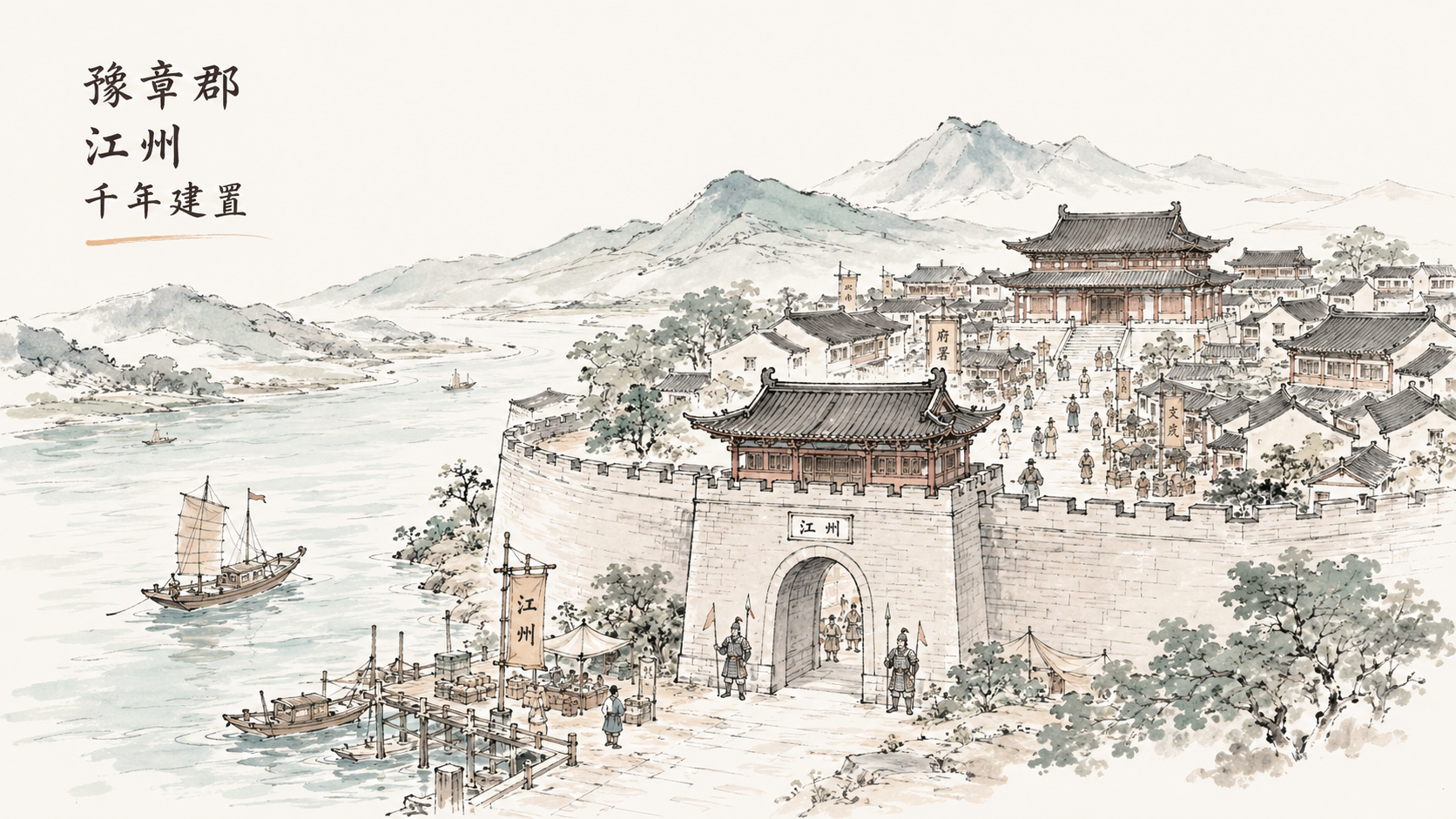
Ming and Qing Consolidation
In 1277 AD, the Yuan Dynasty changed Linjiang Military Prefecture to Linjiang Route.
In 1369 AD, Zhu Yuanzhang changed Routes to Prefectures, establishing Jiujiang, Nankang, and Ruizhou Prefectures.
In 1376 AD, the provincial government was renamed the Jiangxi Provincial Administration Commission. Jiangxi as a provincial-level administrative unit was formally defined.
In 1512 AD, Wannian County was established from parts of four counties.
In 1743 AD, a unique change occurred: Lianhua Subprefecture was established at Lianhua Bridge.
By the late Qing, Jiangxi had a stable structure of 13 prefectures, 1 state, and 78 counties.
13 prefectures, 78 counties. This framework continues largely unchanged to this day.
Modern Transformation
In 1913, the Republic of China abolished the prefecture system. Jiangxi was divided into four circuits: Yuzhang, Xunyang, Luling, and Gannan.
In 1914, Dehua County was renamed Jiujiang County, and Longquan County was renamed Suichuan County.
In November 1931, the Provisional Central Government of the Chinese Soviet Republic was founded in Ruijin, renaming it “Ruijing.”
On May 17, 1949, Jiujiang was liberated. City and county administrations were soon separated.
In 1960, the State Council approved the establishment of prefecture-level Xinyu City. In 1983, the Jiujiang region was abolished, and its 10 counties were placed under Jiujiang City.
In December 1989, Ruichang was upgraded from a county to a city.
From 221 BC to 1989 AD—over two thousand years of administrative evolution—Jiangxi as we know it today was finally formed.
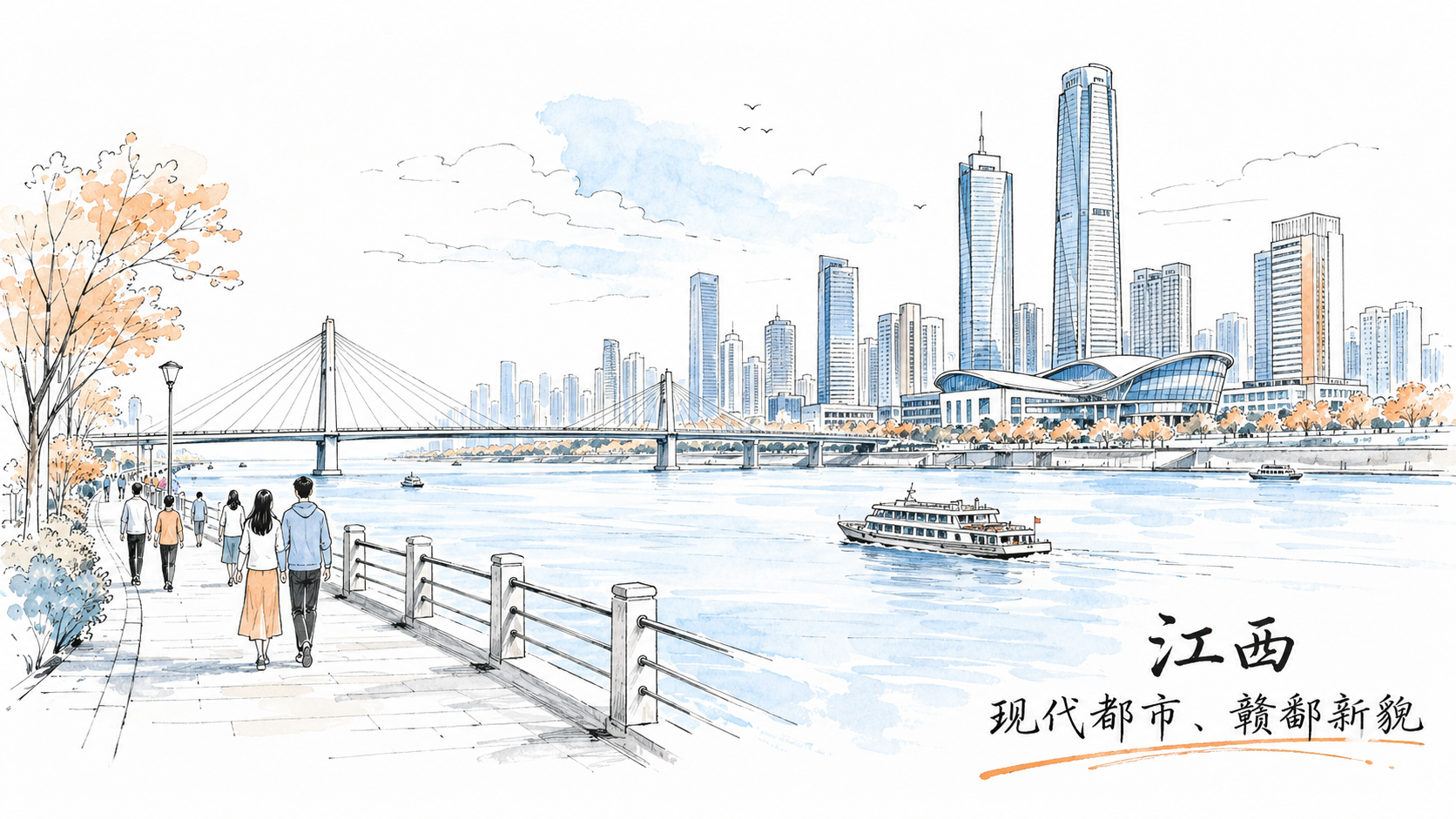
Jiangxi in Numbers
From Qin-Han to the modern era, Jiangxi’s administrative structure has undergone countless changes.
But some numbers are worth remembering:
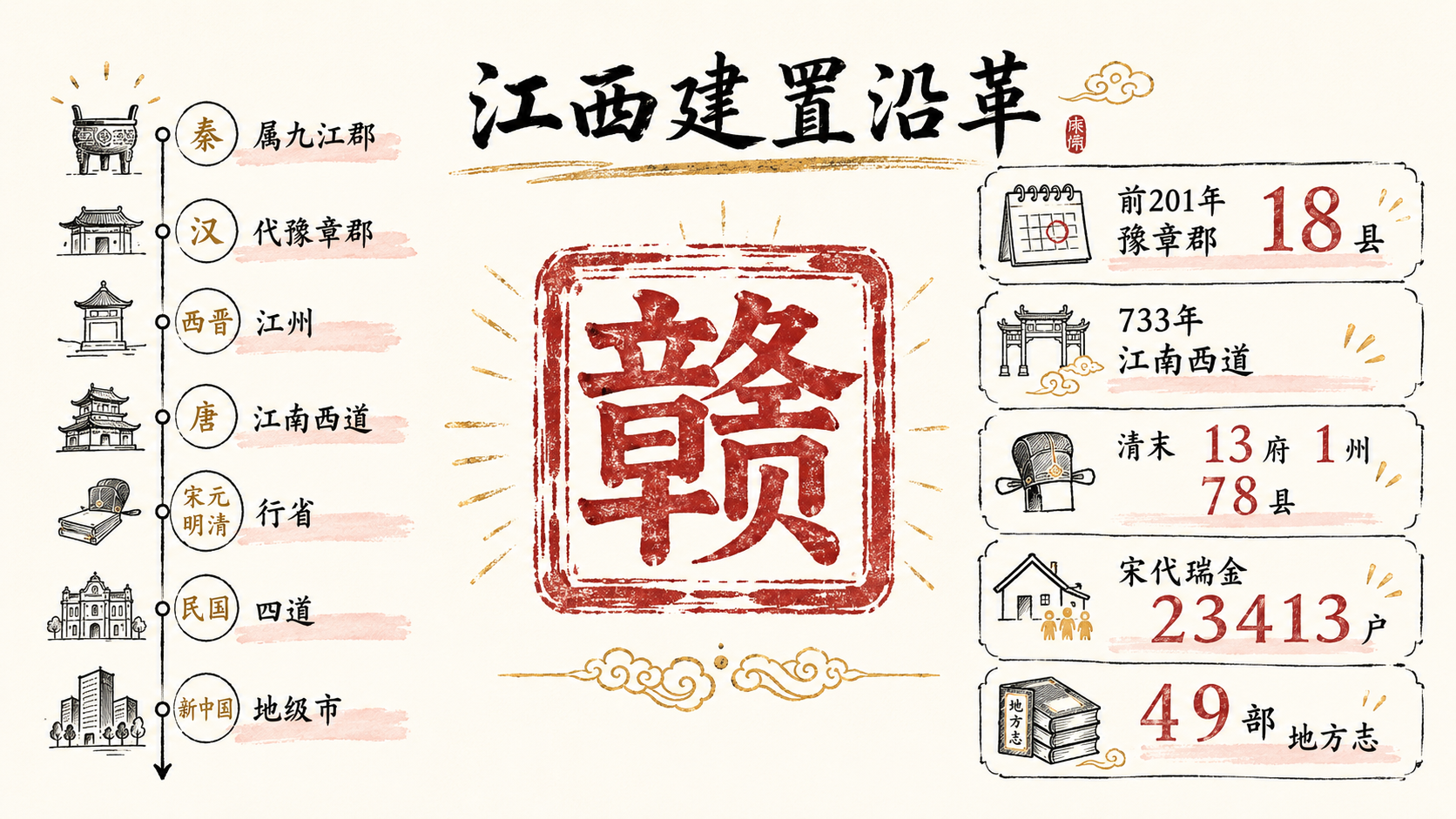
- 201 BC: Yuzhang Commandery established with 18 counties
- 733 AD: “Jiangnan West Circuit” named, “Jiangxi” born
- Late Qing: 13 prefectures, 1 state, 78 counties
- Song Dynasty Ruijin: 23,413 resident households
- 49 local chronicles—the foundation of this article
Every number bears witness to a piece of history.
Jiangxi’s story is not just a provincial story. It is a microcosm of the evolution of China’s administrative system.
From the Qin Dynasty’s commandery-county system, to the Tang’s circuit system, to the Yuan-Ming provincial system, to today’s city-governing-county system.
Over two millennia, names and boundaries have changed. But the people of this land have never stopped moving forward.
Names change. Borders shift. But the land of Gan-Po endures.