In December 1930, the Shaowu-Guangze highway opened.
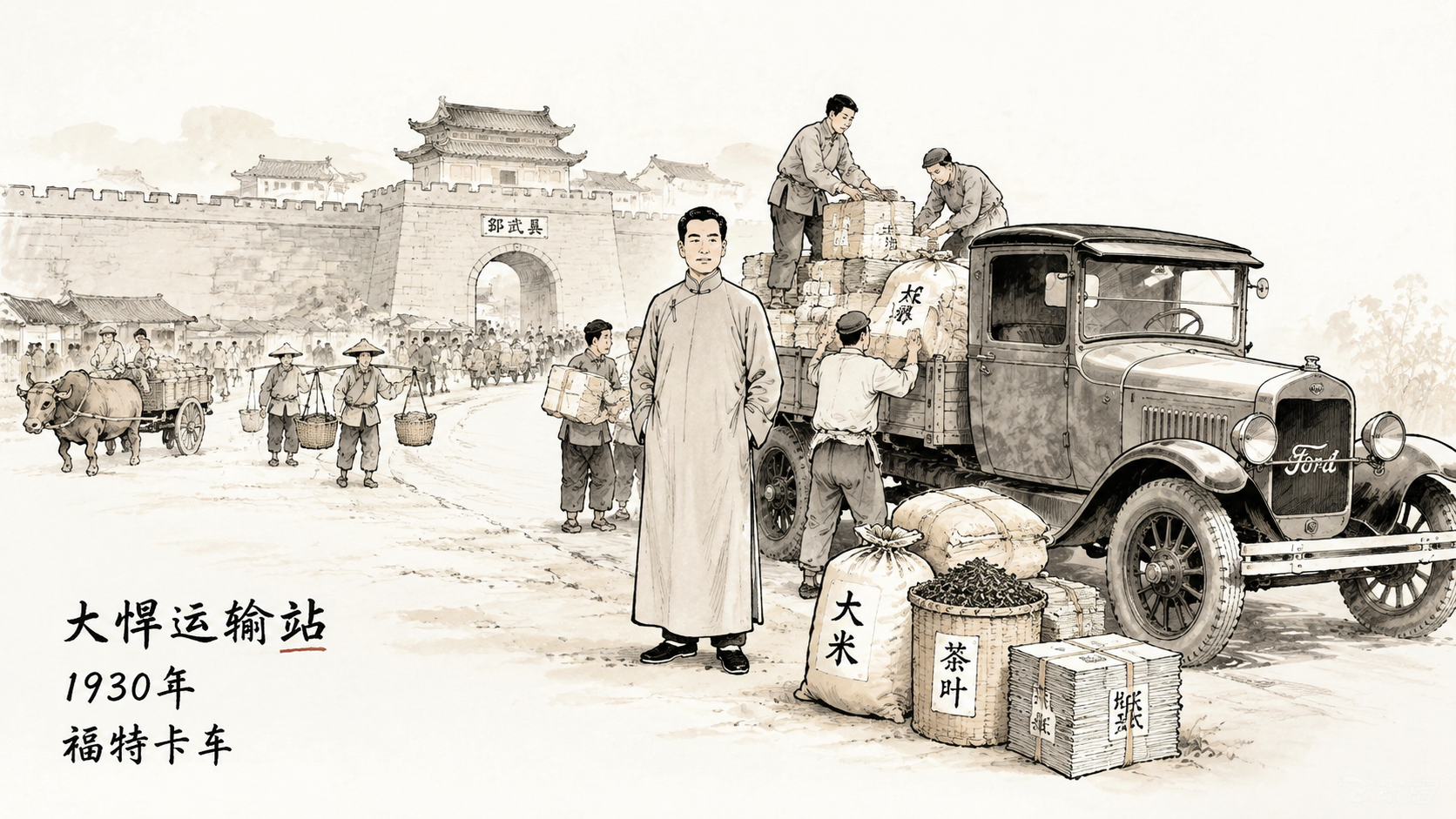
Zheng Da Ti stood by the roadside, watching the first Ford truck pass. He knew the transportation landscape of Northern Fujian was about to change forever.
Before this, commodity flow in Northern Fujian relied entirely on the Futun Creek river system—the treacherous “Eighteen Rapids” that barely functioned during dry seasons. Ox carts and human porters offered efficiency so low it was despairing.
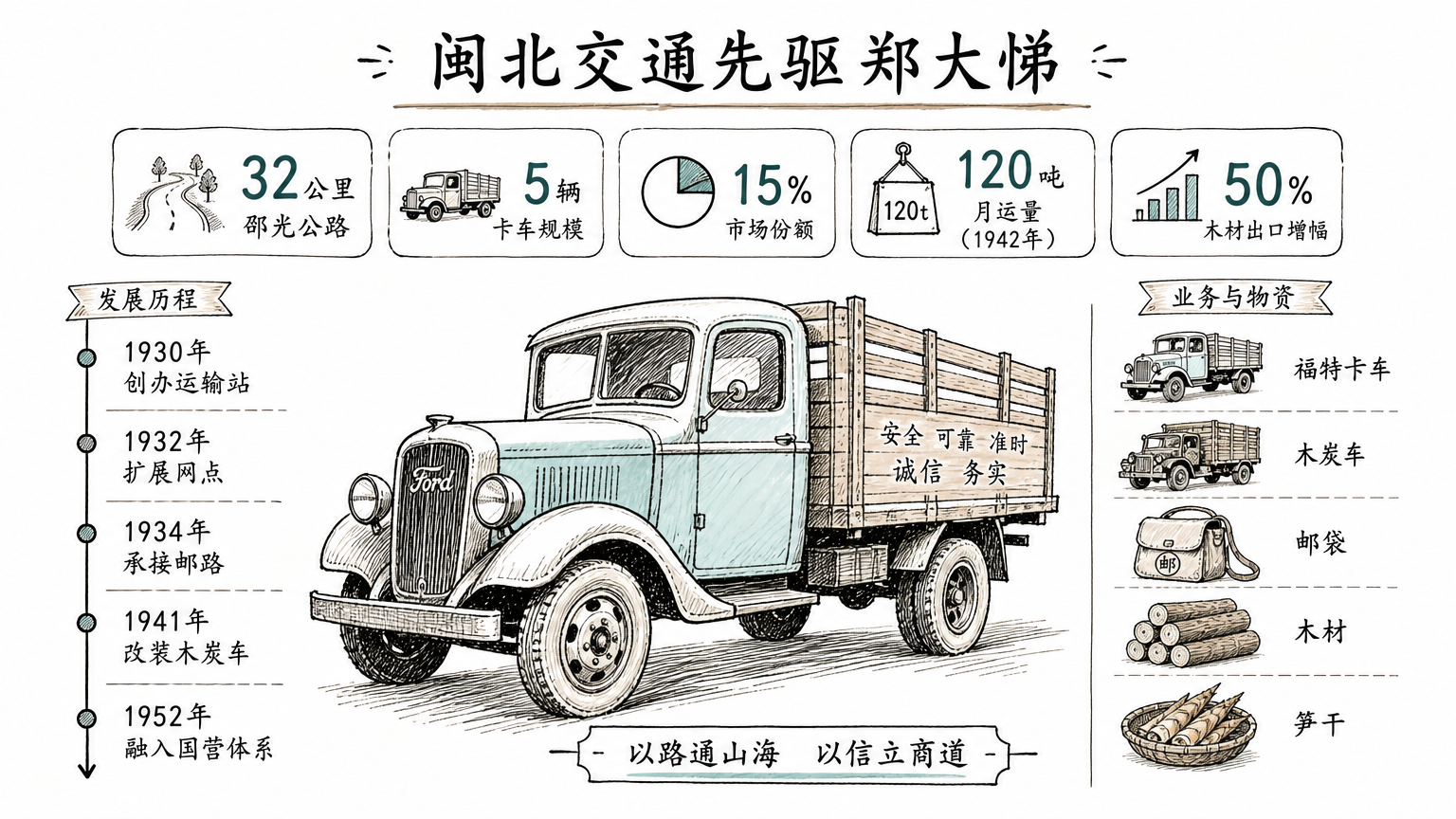
The “Da Ti Motor Vehicle Passenger and Freight Transport Station” Zheng founded was one of the few private transport institutions in Northern Fujian to operate its own fleet. Starting with two Ford trucks, expanding to five by 1932, then converting to charcoal-burning vehicles during the war—over twenty years, he sustained the “lifeline” connecting the mountainous interior to the outside world.
Shaowu, Guangze, Jian’ou, Shunchang, Pucheng, Jianyang, Zhima, Shanguan, Sanguan, Fuling, Guxian
The End of the Water Transport Era
Before road transport emerged, commodity flow in Northern Fujian heavily depended on the Futun Creek river system.
During the Guangxu period (1875–1908), Shaowu served as a vital gateway between Fujian and Jiangxi, trading with Fuzhou via the hazardous “Eighteen Rapids.” Navigation was treacherous, and efficiency plummeted during dry seasons. By the Republican era, these antiquated methods could no longer meet burgeoning commercial demands.
In 1928, Fujian Province began planning the Shaowu-Guangze road. This 32-kilometer highway was a linchpin in Northern Fujian’s modern transportation network. Zheng Da Ti astutely realized that as roads extended, motor vehicles would inevitably replace traditional ox carts and human porters.
December 1930 marked the completion of the Shaowu-Guangze Highway—not just a geographic connection, but a liberation of productivity. Statistics show that in the early 1930s, Shaowu’s permanent population was approximately 124,000, while annual import-export trade exceeded 1 million silver dollars, creating urgent demand for professional freight services.
Pioneering Private Enterprise
In 1930, Zheng Da Ti officially established the “Da Ti Motor Vehicle Passenger and Freight Transport Station” in Shaowu.
In its early days, he faced dual challenges: capital shortage and technical expertise gaps. Initially purchasing two American Ford trucks for trial operations, primarily running between Shaowu and Guangze.
Zheng’s business strategy was remarkably forward-looking. In 1931, he introduced distance-based pricing and scheduled departures. The Shaowu City Chronicle records that fares were dynamically adjusted based on road conditions, costing approximately 0.05 to 0.08 silver dollars per kilometer.
By 1932, the fleet expanded to five vehicles, with branch agencies established in key locations like Guangze and Zhima. This networked layout allowed Da Ti Transport to capture about 15% of Northern Fujian’s passenger and freight market by the mid-1930s, making Zheng a prominent figure in Shaowu’s business community.
Connecting Fujian and Jiangxi
Zheng’s transport empire was inextricably linked to Shaowu-Guangze Highway maintenance.
In 1933, provincial government tightened road management, integrating the route into the provincial highway system. Zheng not only focused on freight but also deeply participated in postal route development. In 1934, Da Ti Transport signed a contract with Fujian Postal Bureau to handle mail transit for Shaowu-Guangze and Zhima sections.
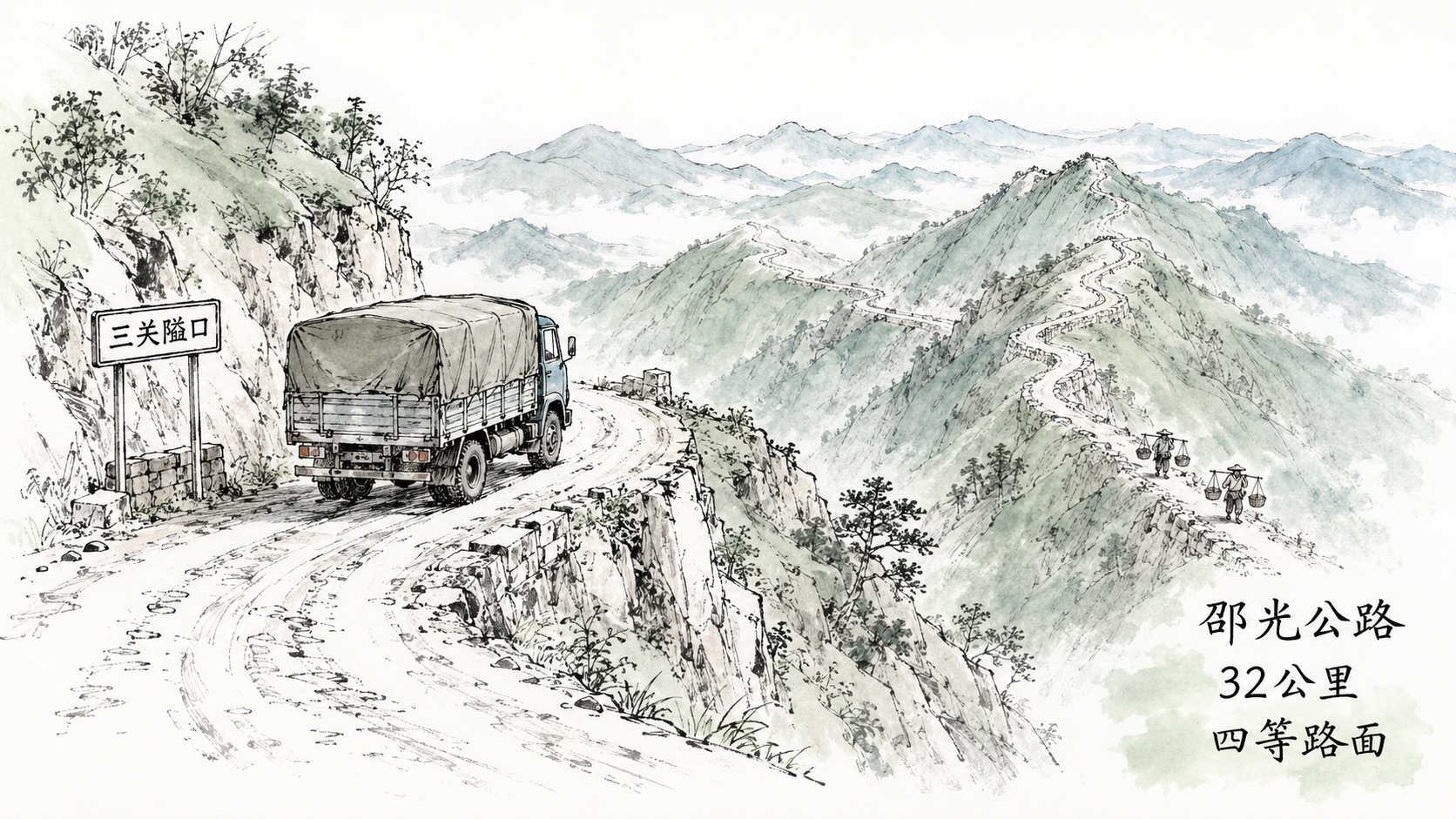
Geographically, the Shaowu-Guangze route was extremely complex, traversing high-altitude passes like Sanguan and Fuling. In 1934, road width was only 3.5 to 5 meters—a typical Grade IV road.
Yet Zheng’s fleet maintained two passenger trips daily under these harsh conditions. During this period, Shaowu’s function as a distribution center was greatly enhanced. 1934 statistics show over 30 commodity types—paper, tea, rice—transshipped via motor vehicle daily. Notably, 40% of Guangze’s premium dried bamboo shoots reached Shaowu via Zheng’s fleet before shipping to Fuzhou.
Perseverance Under War
After the 1937 Anti-Japanese War outbreak, Fujian’s coastal ports fell one after another, shifting logistics toward the mountainous interior.
Shaowu’s secure inland location made it a retreat for provincial government and key institutions. In 1938, Fujian Provincial Post-Relay Management Office was established, and parts of Zheng’s private fleet were requisitioned for military and civilian supply efforts.
During the war, fuel was extremely scarce. In 1941, Da Ti Station vehicles were forced to convert to charcoal-burning trucks. Though this modification reduced speeds, it ensured Northern Fujian-Jiangxi border communication wasn’t severed under extreme blockade.
Records show that in 1942, despite severe road damage, Zheng continued operating the Shaowu-Guangze-Zhima route, transporting over 120 tons of military grain and salt monthly. This steadfastness during wartime earned the “Da Ti” brand high prestige among locals.
The Shift from Private to State Ownership
After the war victory, Northern Fujian transport saw brief resurgence.
In 1946, Zheng attempted a comeback, purchasing three new trucks and planning route extensions to Jianyang and Pucheng. However, ensuing inflation and social instability cast shadows over private industry.
On Shaowu’s liberation eve in 1949, Da Ti Transport Station had only three aging vehicles. In the early 1950s, with socialist transformation progression, Shaowu Branch of Fujian Provincial Highway Transport Bureau was established. In 1952, private transport capital exemplified by Zheng’s enterprise was gradually integrated into the national planned transport system through joint ventures or reform.
Though “Da Ti Transport Station” vanished as an independent entity, the route layouts and operational standards Zheng established in the 1930s laid foundations for subsequent state-owned transport systems in Shaowu and Northern Fujian.
Conclusion
Reflecting on Zheng Da Ti’s life, he was not only a successful businessman but a participant in Northern Fujian’s modernization.
Between 1930 and 1949, through private initiative, he achieved organic integration of infrastructure and commercial logic. The Shaowu City Chronicle shows Zheng’s influence extended beyond transport. Due to improved accessibility, Shaowu’s timber exports jumped from 50,000 to 75,000 cubic meters annually in the 1930s—a 50% increase.
This industrial leap led by transportation proves the profound significance of Zheng’s transport station. Today, beneath Northern Fujian’s crisscrossing highway network, we can still sense the courage and vision Zheng possessed when he first opened the “Da Ti Passenger and Freight Transport” lines.
From caravans to engines, Zheng Da Ti sustained Northern Fujian’s mountain lifeline for twenty years.