The stones of Quanzhou speak.
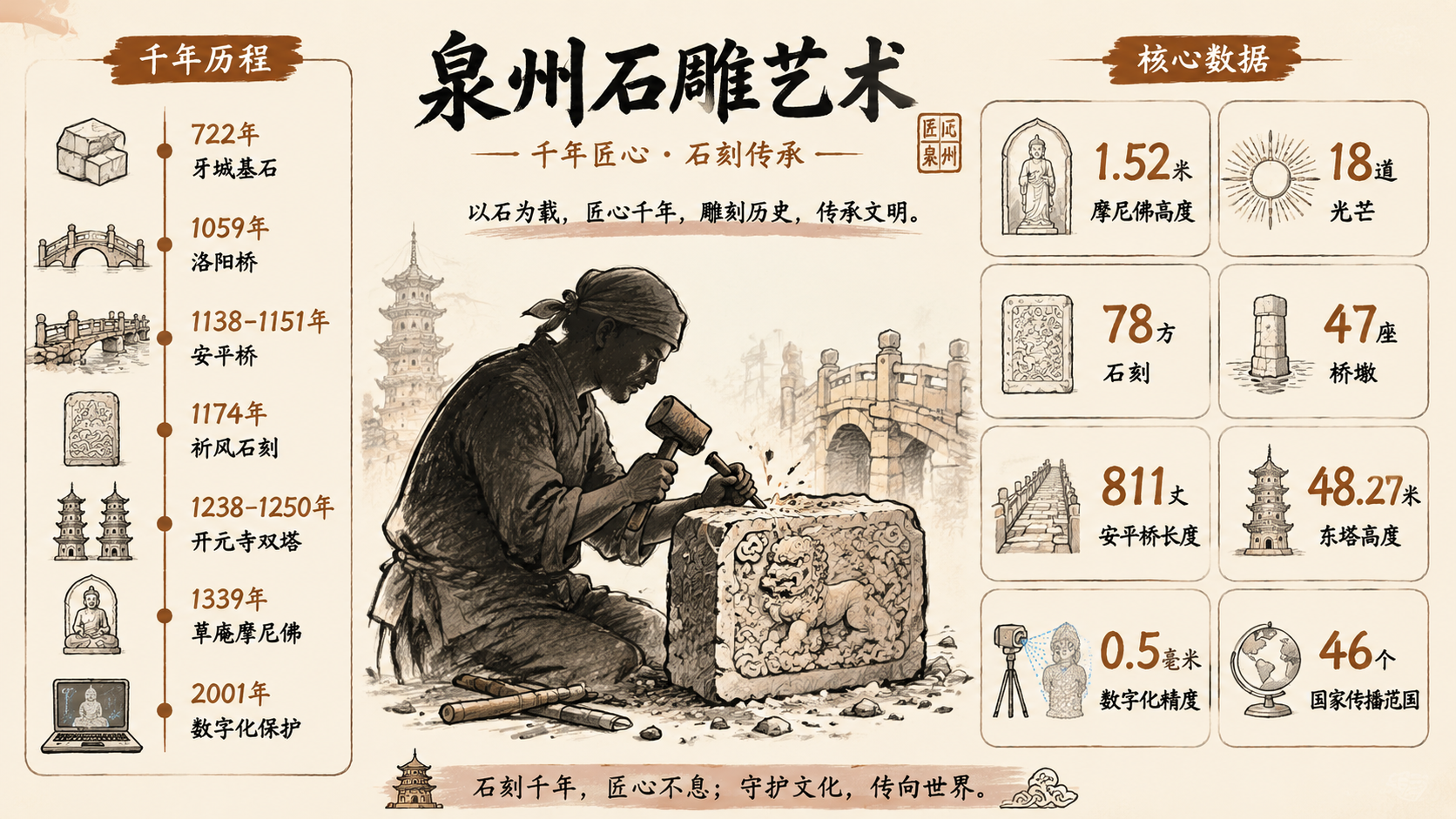
From the foundations of Yacheng in 722 AD to the Mani Buddha in 1339 AD and modern digital modeling, these granite carvings tell a global history.
When I cross-referenced the Quanzhou Architectural Records and Quanzhou Religious Records, I discovered: these silent stones carry the pinnacle craftsmanship of ancient Chinese artisans in the maritime age.
Geographic Links
Cao’an at Huabiao Mountain (Jinjiang, world’s only Mani Light Buddha) Jiuri Mountain (Nan’an, Song Dynasty wind-praying inscriptions) Kaiyuan Temple (West Street, Zhenguo and Renshou Pagodas) Luoyang Bridge (Spanning Luoyang River) Anping Bridge (Longest ancient cross-sea stone bridge) Tianhou Temple (Southern city, Minnan stone carving showcase)
I. Light of the Icons in Stone
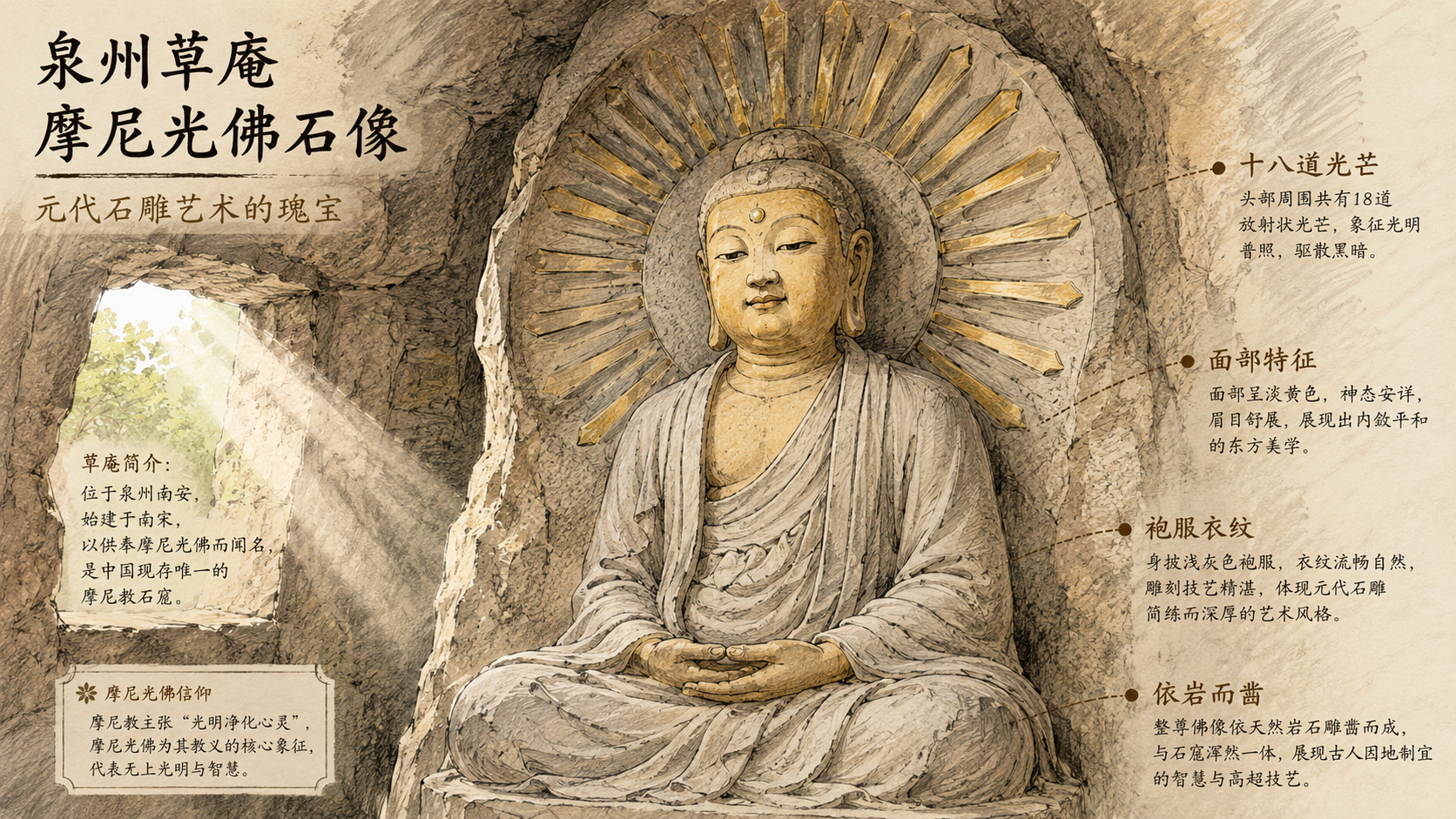
In Cao’an Temple at Huabiao Mountain sits the world’s only Manichaean stone statue.
Carved in 1339 AD, it stands 1.52 meters tall and 0.83 meters wide. The natural rock color variations—yellowish face, greyish robes—symbolize Manichaeism’s “worship of light.”
Surrounding the head are 18 rays of light, each carved to a uniform 2 cm depth, demonstrating Yuan Dynasty masons’ mastery of granite.
Jiuri Mountain preserves 78 inscriptions, with **13 recording official Song Dynasty wind-praying ceremonies. The earliest dates to 1174 AD.
II. Mechanical Miracles of Sea-Spanning Bridges
Luoyang Bridge, completed in 1059 AD, stretches 731.29 meters with 47 piers. Craftsmen pioneered “oyster-growing foundation strengthening,” using natural cement from oyster secretions. Single stone beams exceed 10 tons.
Anping Bridge, built 1138-1151 AD, reaches 811 Zhang (2,255 meters) with 361 original piers. These represent the pinnacle of 11th-12th century global civil engineering.
III. The Twin Pagodas: A Stone Encyclopedia
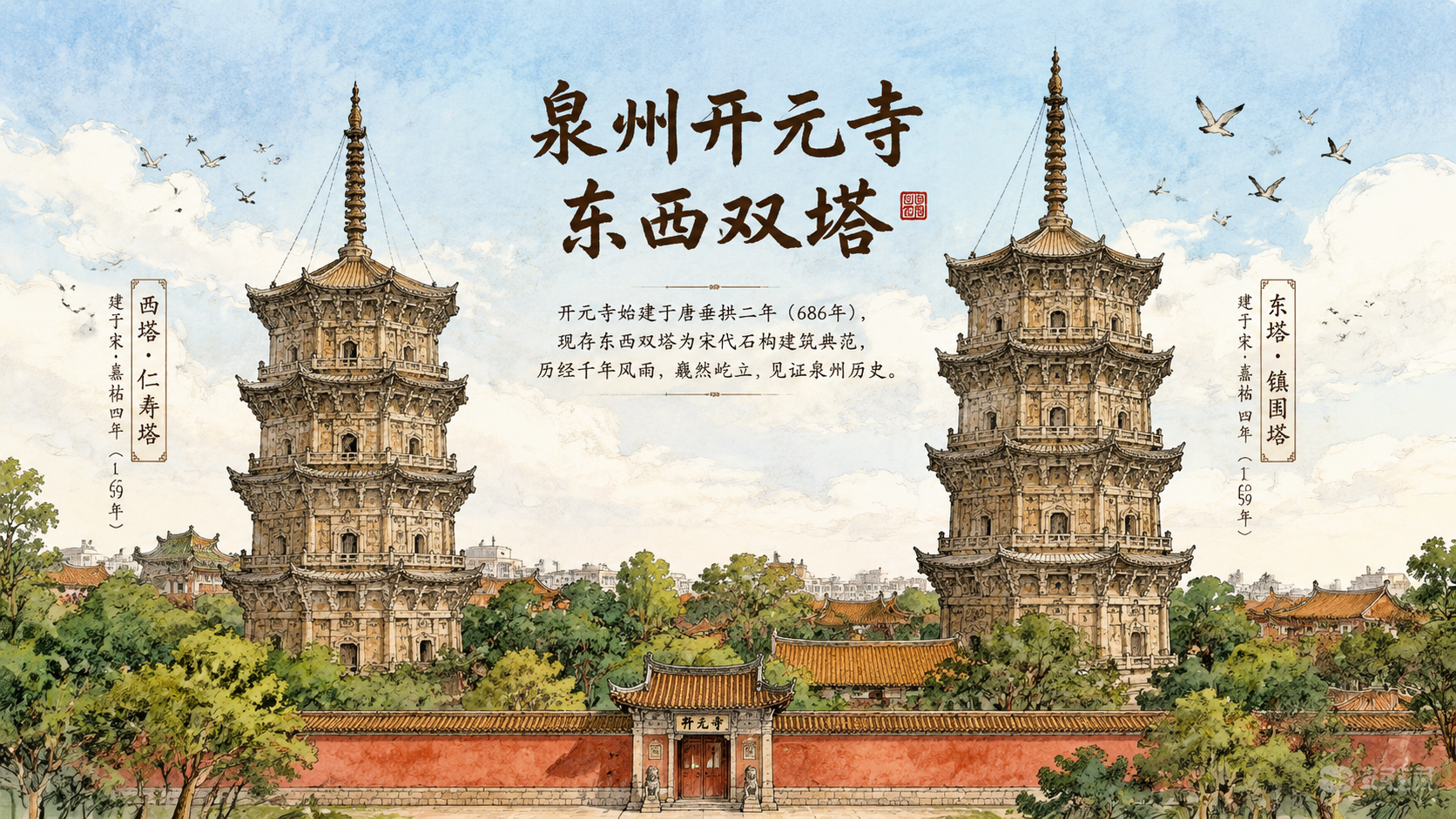
Kaiyuan Temple’s Twin Pagodas are Quanzhou’s crown jewels. The East Pagoda (48.27m) and West Pagoda (44.06m) feature 80 reliefs depicting Buddhist cosmology. The “Monkey Pilgrim” relief on the West Pagoda, 1.2m tall, is recognized as a precursor to Sun Wukong.
Their millimeter-level precision allowed survival of the 1604 Magnitude 8 earthquake.
IV. Digital Immortality in Modern Preservation
In the 21st century, Quanzhou created high-precision digital models of its stone structures. The Twin Pagodas were scanned with 0.5 mm accuracy, revealing minute inscriptions and 800 years of weathering patterns. All 78 Jiuri Mountain inscriptions have been digitally archived for preservation and interactive display.
V. A Millennium in Numbers
Key figures tell the story:
- 722 AD: Yacheng foundations
- 1059 AD: Luoyang Bridge completion
- 1138-1151 AD: Anping Bridge construction
- 1174 AD: Earliest wind-praying inscription
- 1238-1250 AD: East Pagoda completion
- 1339 AD: Mani Buddha carving
- 1.52m: Mani Buddha height
- 18 rays: Radiating light beams
- 78 inscriptions: Jiuri Mountain collection
- 47 piers: Luoyang Bridge
- 811 Zhang: Anping Bridge length
- 48.27m: East Pagoda height
- 0.5 mm: Digital precision
- 46 countries: Global spread of Quanzhou carving style
From stone to bridge, from pagoda to port, these numbers compose Zayton’s thousand-year global epic.