South of Fuzhou’s Minjiang River stands a hill.
Once home to consulates from 17 nations, its buildings tell the story of modern European architecture.
When I cross-referenced the Annals of Cangshan District and Annals of Fuzhou Customs, I discovered: Yantai Hill is more than geography—it was the outpost of 19th-century globalization.
Geographic Connections
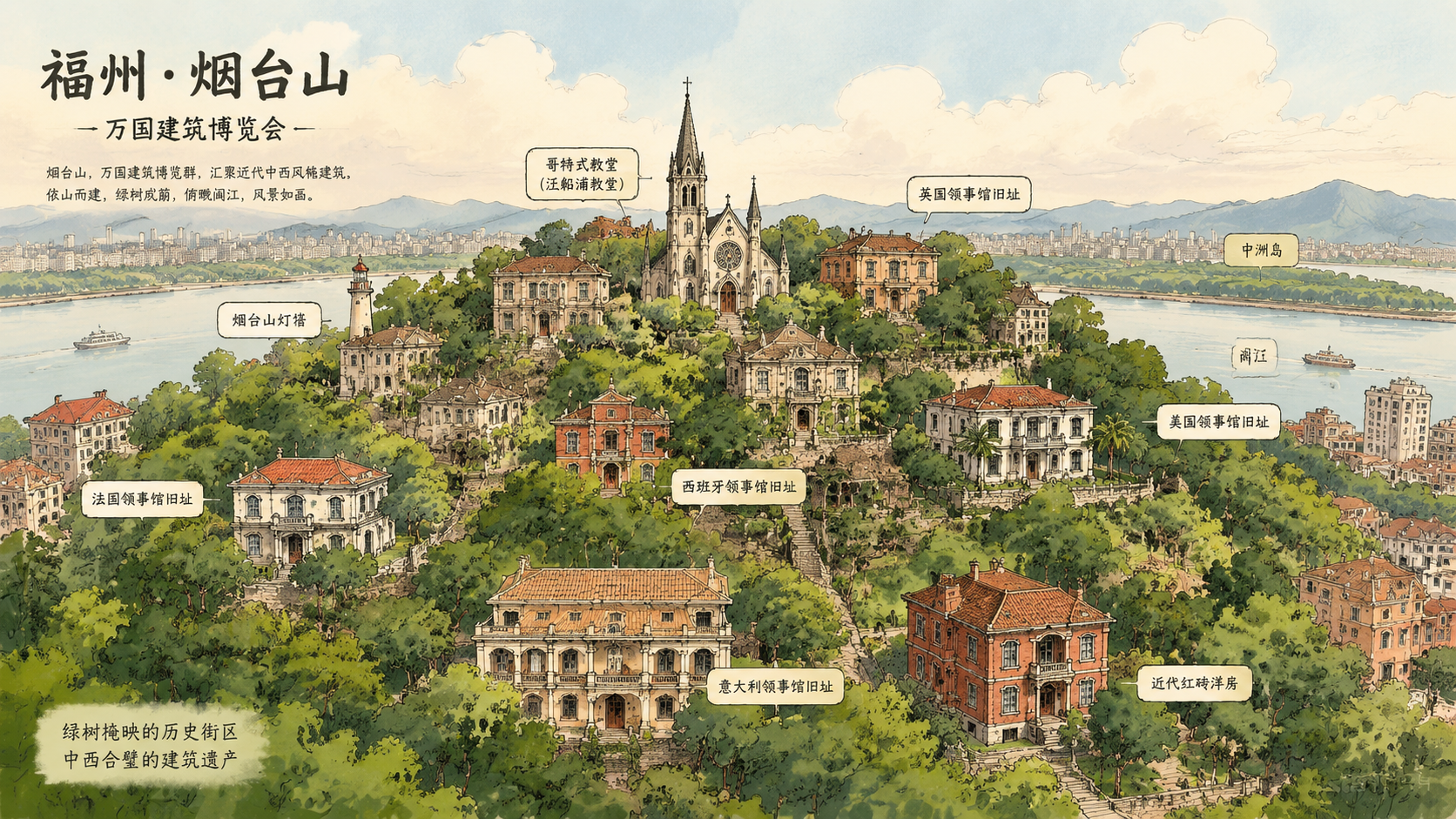
Yantai Hill (Cangshan historic district) Lequn Road (Consulate concentration area) Aiguo Road (British Consulate site) Fanchuanpu (Min Customs location) Minjiang River (Golden waterway of Fuzhou treaty port)
I. The 1844 Transfer of Geographic Power
In 1842, the Treaty of Nanjing designated Fuzhou as one of the five treaty ports.
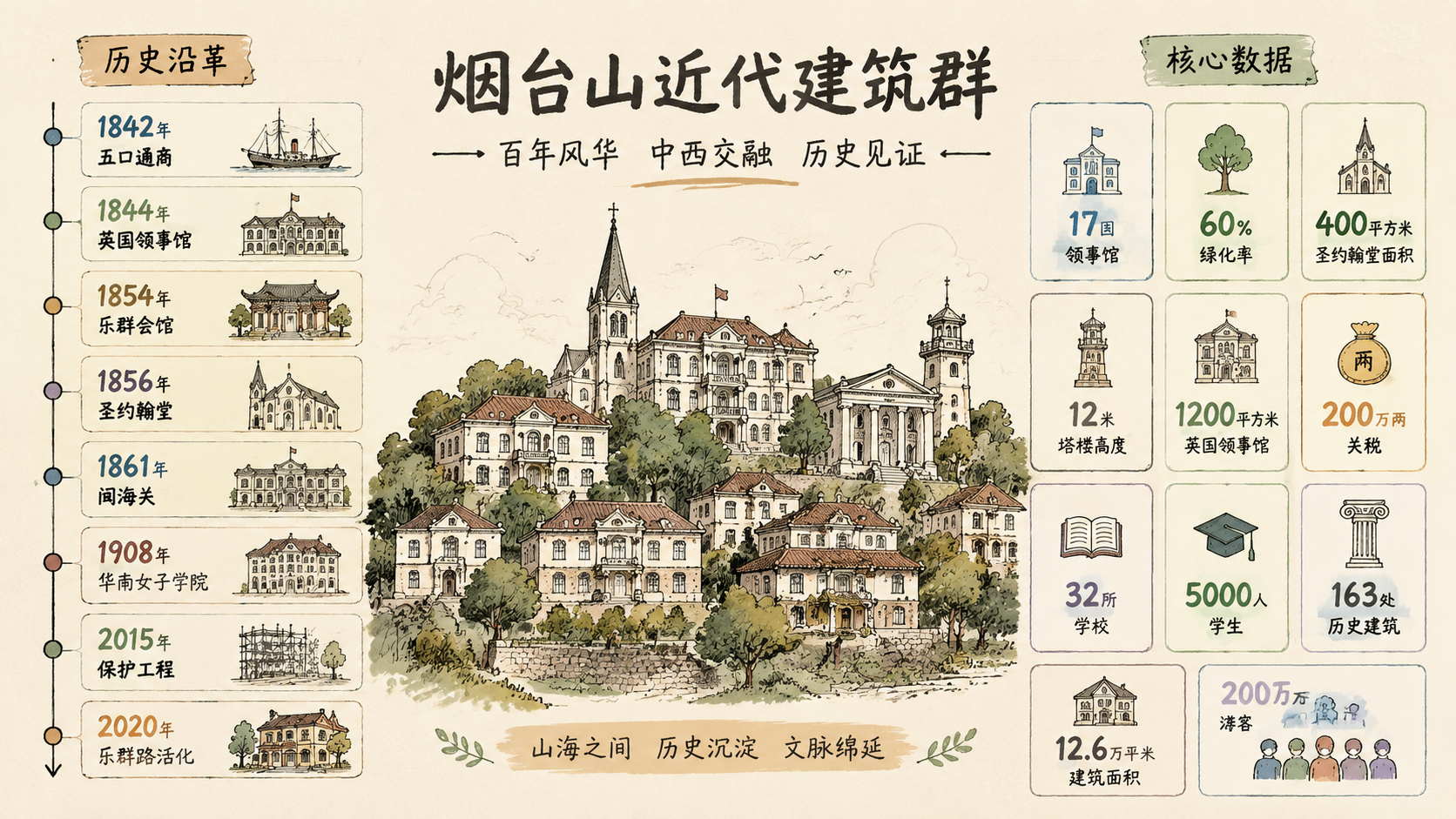
In 1844, British Consul G.T. Lay settled in Cangshan, marking the beginning of Yantai Hill’s century as a consular district.
Within a decade, the foreign population grew 10-fold, transforming the landscape completely.
From 1844 to 1900, 17 countries established consulates or agencies here, strategically positioned along ridgelines for visual dominance.
By the 1890s, green coverage exceeded 60%, creating a “garden city” distinct from Sanfang Qixiang.
II. Stone Churches and Red Brick Mansions
Yantai Hill’s architecture embodies modern European styles.
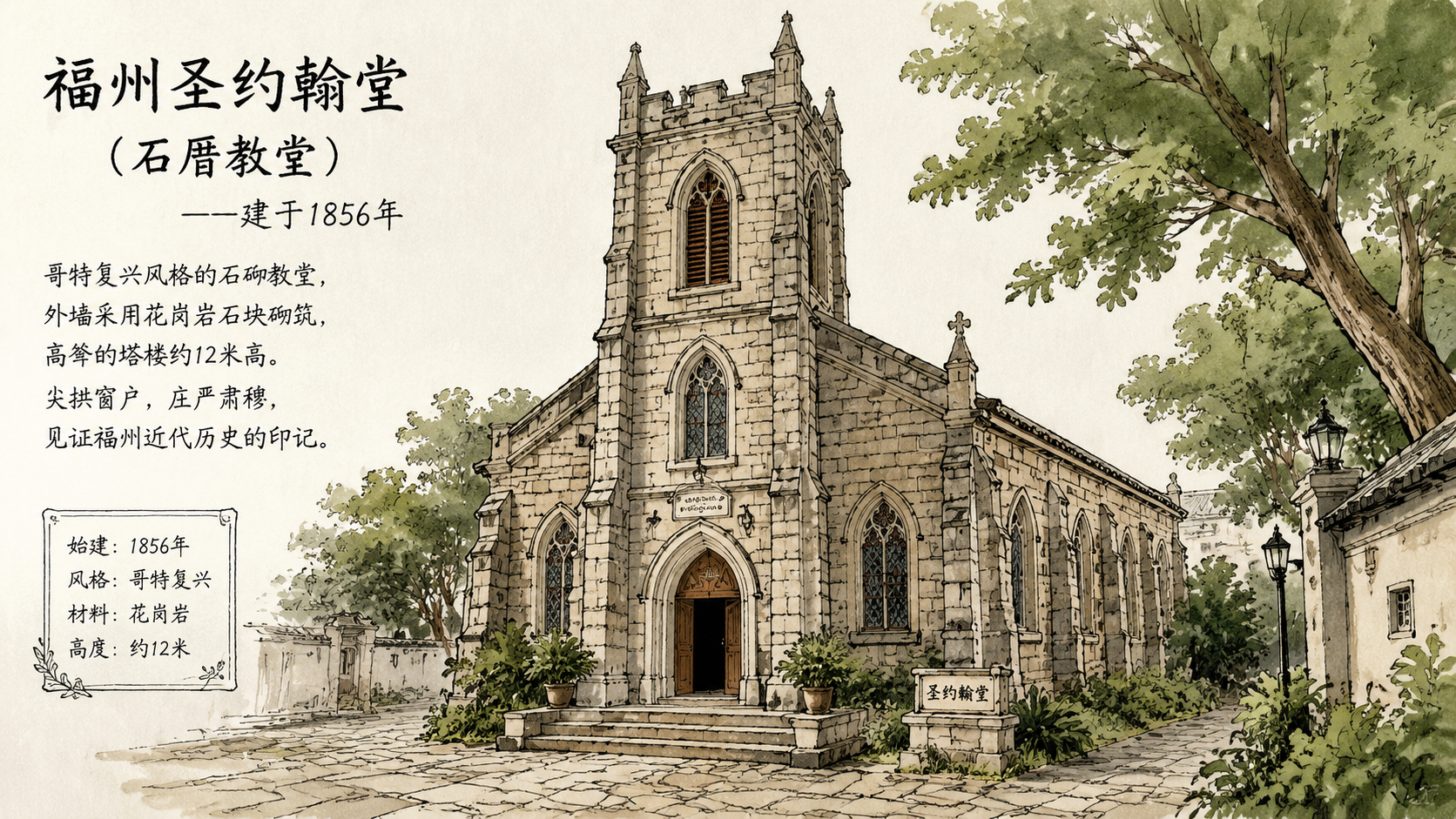
St. John’s Church, built in 1856, covers 400 sqm with granite walls and a 12-meter tower. A pipe organ from London was installed in 1858—a unique cultural spectacle in Fuzhou.
The British Consulate (No. 2 Aiguo Road), built in 1854 and expanded in 1879, spans 1,200 sqm. Its colonial verandah style suited Fuzhou’s climate while asserting colonial authority.
III. Economic Engine: Customs and Education
Yantai Hill’s rise depended on Min Customs’ economic power.
Established in 1861 at Fanchuanpu, Min Customs controlled tea trade that accounted for one-third of national output in the 1880s, generating peak annual revenue of 2 million taels of silver.
This funded infrastructure like customs wharves and residences, shaping the riverside commercial landscape.
In education, Anglo-Chinese College opened in 1881, followed by Hwa Nan Women’s College in 1908. By the 1920s, 32 Western-style schools educated over 5,000 students in the area.
IV. From Silent District to Vibrant Landmark
The 2013 cultural relics census identified 163 protected historic buildings covering 126,000 sqm.
The 2015 preservation project created digital archives with high-precision 3D point cloud data for all core buildings.
By 2020, Lequn Road was revitalized. Annual visitors surged from under 100,000 to over 2 million in 2022.
V. A Century of Digital Mirrors
Key figures reveal the story:
- 17 nations with consulates (1844-1900)
- 60% green coverage in consular district (1890s)
- 400 sqm: St. John’s Church floor area
- 12 meters: St. John’s tower height
- 1,200 sqm: British Consulate area
- 2 million taels: Peak Min Customs revenue
- 32 schools: Western institutions in the 1920s
- 5,000 students: Total enrollment
- 163 buildings: Preserved historic structures
- 126,000 sqm: Total preserved floor area
- 2 million visitors: Annual count in 2022
Every granite church and red-brick mansion is a specimen of Fuzhou’s modern history, built through surveying data and records.