Guangze, Shaowu, Shunchang, Yingtan, Xiamen, Zixi, Zhima, Nakou, Shaikou, Weimin, Yangkou, Dabugang, Futun Creek
Do you know how the Yingxia Railway was built?
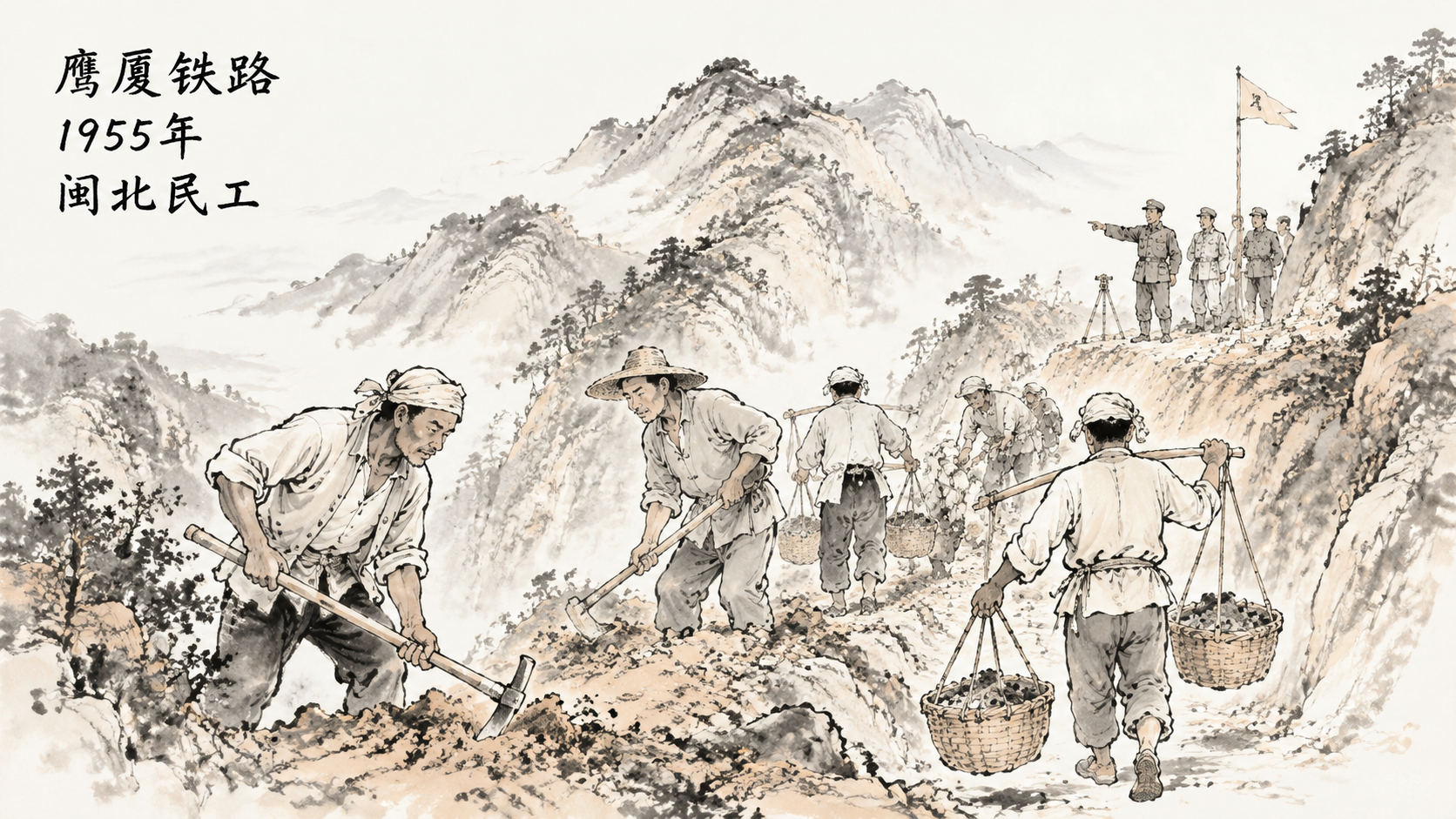
The answer may surprise you: hundreds of thousands of civilian workers, armed with picks, shovels, carrying poles, and bamboo baskets, dug it out of the mountains of Northern Fujian—inch by inch.
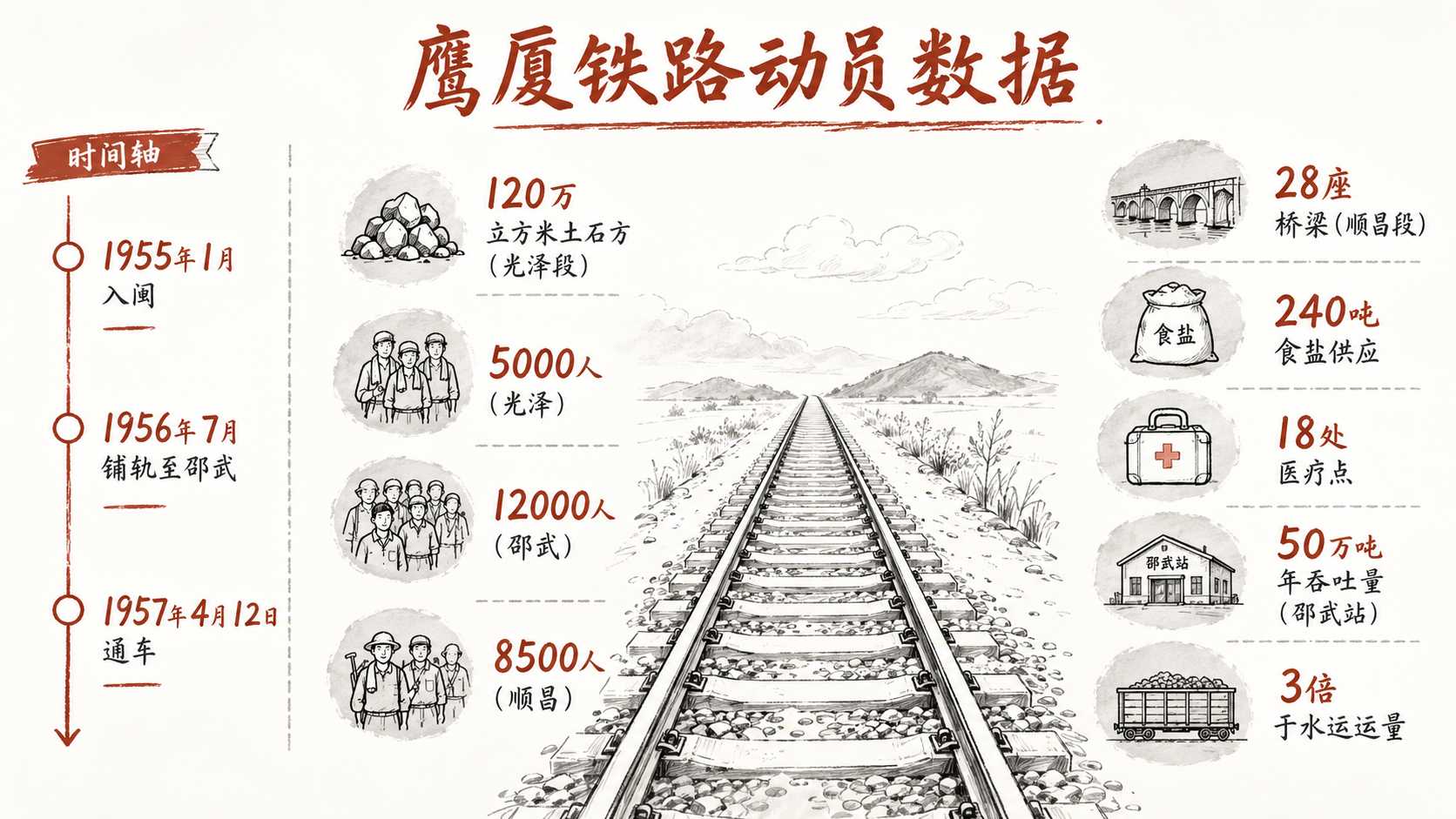
From 1955 to 1957, every county in Northern Fujian was mobilized. Guangze contributed 5,000 workers. Shaowu sent 12,000. Shunchang added 8,500.
No heavy machinery. Just people.
1955: Guangze Leads the Way
In January 1955, the Yingxia Railway entered Fujian from Zixi, Jiangxi, crossing into Guangze County.
Guangze established a “Committee for Supporting Railway Construction.” Within two months, over 5,000 able-bodied laborers were mobilized.
5,000 people might be standard for a large construction project today. But in 1955, it was nearly every able-bodied man Guangze had.
Over the year, the Guangze section completed over 1.2 million cubic meters of earthwork. The county also supplied 35,000 cubic meters of timber and 150,000 bamboo poles.
“Whole county supports the railway”—this wasn’t just a slogan. It really happened.
Shaowu: An Army of 12,000
In February 1955, the Railway Engineering Corps advanced into Shaowu.
Shaowu adopted a “militia division” model to manage its 12,000 civilian workers. They were organized into companies and squads, militarized and centrally deployed.
By July 1956, when the rails reached Shaowu Station, the laborers had already built major bridges across the Futun Creek and several tunnels totaling over 1,500 meters.
In bridge construction, workers and Railway Corps soldiers used three-shift continuous operations—the work never stopped.
The county supplied 240 tons of salt for the workers and established 18 temporary medical stations.
From the front lines to the rear, a complete support chain was formed.
Shunchang: Miracles on the Cliffs
The Shunchang section was the most difficult part of the entire Yingxia Railway.
Steep cliffs, multiple crossings of the Futun Creek. In November 1955, the Shunchang County Railway Command was established.
By January 1956, 8,500 workers from 12 townships were organized into the “Shunchang Civilian Worker Support Brigade.”
During the rainy season of 1956, laborers carved subgrades into sheer ridges. They completed 28 bridges and 145 culverts.
Workers in Weimin and Yangkou set a record of “4.5 cubic meters of earthwork per person per day.”
4.5 cubic meters—carried in bamboo baskets, one load at a time, hundreds of trips a day.
To feed tens of thousands of soldiers and workers, Shunchang opened a green water-transport channel on the Futun Creek, shipping over 3,000 tons of rice.
The Logistics Challenge
Feeding and housing tens of thousands was harder than digging tunnels.
In 1954, Fujian Province set detailed subsidy standards: daily grain rations plus 1.2 to 1.5 yuan in cash.
“Temporary canteens” and “open-air movie theaters” were set up at work sites.
When malaria broke out in the autumn of 1955, Shaowu County urgently mobilized 30 doctors to patrol all sites. The infection rate was kept below 3%.
During the 1956 Spring Festival, Shunchang organized a 150-member performing arts troupe to visit tunnels and shafts.
Political mobilization combined with welfare support. Under these extremely harsh conditions, the labor force maintained a construction speed twice that of similar projects.
The Steel Dragon
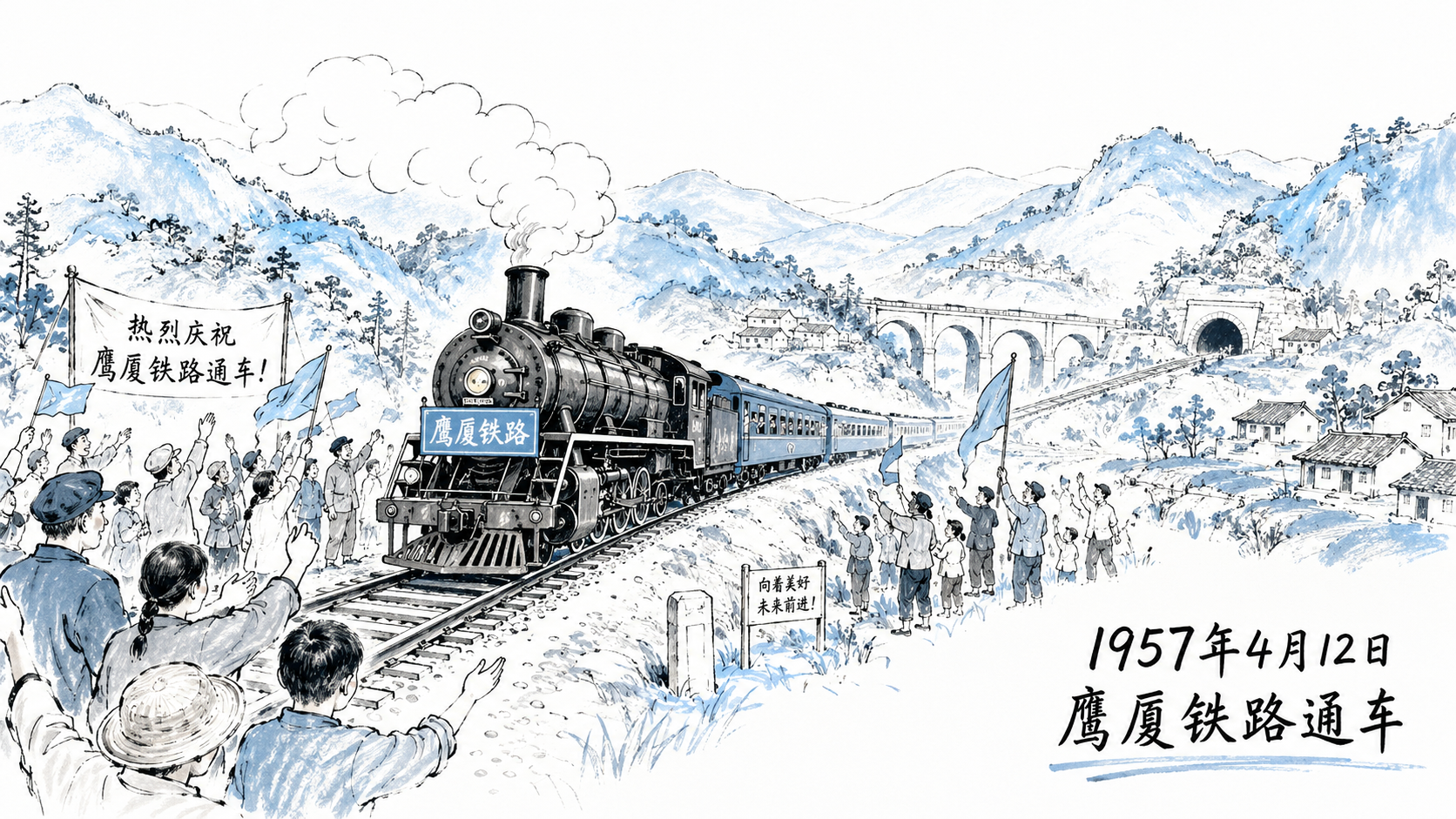
On April 12, 1957, the Yingxia Railway officially opened.
After opening, Shaowu Station’s annual throughput rapidly exceeded 500,000 tons—three times the total water transport volume of 1954.
In 1958, thousands of civilian workers transitioned to become railway maintenance workers or station stevedores.
Farmers became industrial workers.
In the 1960s, leveraging the railway, wood processing and chemical plants were established in Guangze and Shunchang. Northern Fujian transformed from a mere timber exporter into an industrial raw material base.
One railway changed the fate of Northern Fujian.
Numbers and Memory
A timeline to remember:
- January 1955: Yingxia Railway enters Fujian
- 1955-1956: 5,000 in Guangze, 12,000 in Shaowu, 8,500 in Shunchang
- Guangze section: 1.2 million cubic meters of earthwork
- Shunchang section: 28 bridges, 145 culverts
- 1956 Spring Festival: 150-member troupe performance
- April 12, 1957: Railway opens
- Annual throughput: 500,000 tons
No heavy machinery. No modern equipment.
Just people. Hundreds of thousands of them.
With picks and baskets, they carved a steel dragon through the mountains of Northern Fujian.
The Yingxia Railway is more than a railway. It is the memory of an era.
They weren’t moving earth. They were carving out a nation’s hope.